
How Often to Seal Grout (and Which Sealer Is Worth It)
October 24, 2026
☑️ 150% Money-Back Guarantee | Family Owned Since 1998
10815 Beaver Dam Rd Suite A, Cockeysville; MD 21030
☑️ Lifetime Warranty on Installations
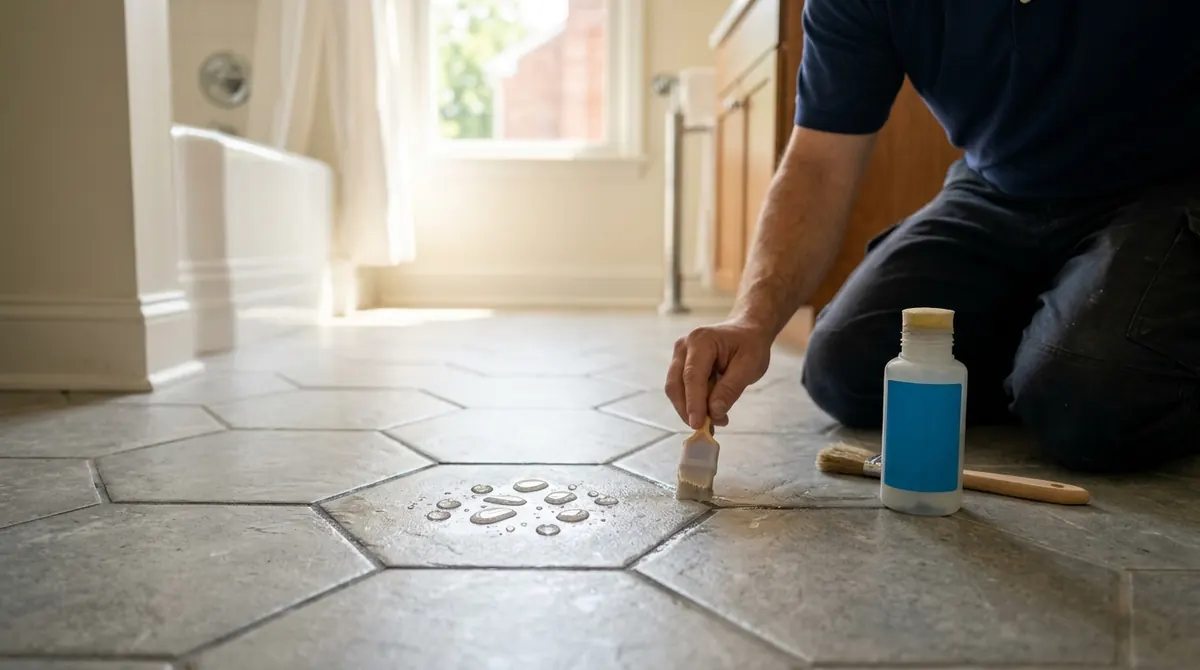
Unpopular opinion. Most grout in Baltimore County doesn’t need sealing nearly as often as the guy at the hardware store says, and some of it needs it way more. So when somebody calls and asks me how often to seal grout, my honest answer is “let’s splash some water on it and see.” That sounds like a dodge. It isn’t. There’s a two-minute test that tells you more than any calendar.
Quick background. We clean tile and grout for a living, along with carpet and rugs and pretty much anything else on a floor. I’ve stood in a lot of bathrooms staring at gray grout lines that used to be white. Most of the time the owner thinks the grout is ruined. Usually it’s just dirty, and unsealed, and the two problems feed each other.
Cement-based grout (which is what’s in most houses) is porous. Tiny holes all through it. Every time you mop, some of that gray mop water goes right in there, along with the bacon grease and the soap scum and whatever Biscuit dragged in from the yard (we all have a Biscuit). It sits. It builds. Grout goes dark from the inside out, kind of like a coffee mug that’s been stained for years.
A good grout sealer basically clogs those pores up a little bit so they quit drinking so much. Not waterproof, by the way! Folks picture a plastic shell over the grout and nope, that’s not it at all. What you’re buying is time, maybe a few minutes for the spaghetti sauce to sit there before it sinks in and you can get to it with a paper towel. I’ve got a whole post on why grout turns black if you want the gross details.
Okay. Before you buy any grout sealer, go fill a cup at the sink (or swipe the kids’ medicine dropper, it works great) and flick some water on the floor.
Pick a grout line people actually walk on, like the spot in front of the dishwasher where you stand every night, or the shower floor, or right inside the back door where the boots come off. Then go make a sandwich and come back in five.
That’s really it. The test is how I figure out how often to seal grout in any one house, because the answer changes room to room. Your powder room nobody uses might go five years. Your shower floor might need it every year.
Rough guide, from what I’ve seen in people’s houses over a lot of years:
High traffic kitchens and mudrooms, every year or two. Showers, about yearly, maybe sooner if you use a lot of harsh bathroom cleaners (more on that below). Bathroom floors and backsplashes that just get splashed now and then, every two or three years is usually plenty. Low use rooms, test it and forget it for a while.
Honestly the biggest factor isn’t the room, it’s what you clean with. Bleach sprays, high pH degreasers, those “scrubbing bubbles” type products, all of that breaks down a sealer faster. Plain warm water and a pH neutral tile cleaner keeps it working a lot longer. So if you’re re-doing it every six months and wondering why, check under your sink.
Fresh grout needs to cure before you seal it. Most manufacturers say somewhere in the range of a couple days to a few weeks, so read the bag. Seal it too early and you trap moisture in there. I’ve seen people seal the same afternoon the tile guy left. Then they call me about haze. Sigh.
There are two main types. Topical sealers sit on the surface like a film. Penetrating ones soak in and work from inside the grout.
Short answer on which one? I recommend a penetrating sealer for almost every house we walk into. Here’s why. Topical coatings look shiny for a bit, then they wear unevenly where people walk, and now you have patchy grout that’s glossy in the corners and dull down the middle. Worse, they can trap moisture underneath. Peeling a failed topical sealer off is a miserable job (ask my guys).
A penetrating sealer doesn’t change the look much, it just quietly does its job. Some are water-based, some solvent-based. Solvent ones tend to last a bit longer but they stink while drying. Open a window, run the fan, keep the kids and pets out for a while. The EPA has decent general info on indoor air and ventilating when you’re using products like that around the house.
What about color sealers? Those are a different thing. They’re basically a stain plus sealer that recolors the grout. Useful if your grout is permanently blotchy and cleaning won’t even it out. But once you go color sealer, you’re kind of married to it.
Biggest mistake I see, hands down. Someone buys a bottle of grout sealer, and rolls it right over dirty grout. Congrats, you just sealed the dirt in. It’ll look like that for years now.
Sealing grout only works on clean, dry grout. That means really clean, not “I mopped Sunday” clean. We use hot water extraction on tile, high pressure, with a spinning tool that blasts the gunk out of the grout lines and sucks it back up at the same time. Then it has to dry. Then sealer goes on.
We do a lot of tile and grout cleaning Cockeysville MD jobs where the customer swears they need new grout. Nine times out of ten, after cleaning, it’s the original color under there. The look on people’s faces when the kitchen floor goes from brown back to almond is kind of the best part of my job.
You can. It’s not hard, just tedious. A small brush or one of those applicator bottles with a roller tip. I do maybe four or five lines, wipe, then the next few, because if that stuff dries on the face of shiny porcelain you’ll be standing there with a rag and some elbow grease cursing at me. Skip the shower overnight, or longer if the bottle says so.
Don’t flood it. A thin, even coat. Maybe a second coat on really thirsty grout. More isn’t better.
Natural stone changes the math, and we get a lot of it up in the bigger houses (marble baths, slate mudrooms, travertine everywhere in anything built around 2005). The stone itself is porous, sometimes more than the grout. So when we’re sealing grout on a stone floor, we’re usually sealing the tile too. And for that? A stone-rated penetrating sealer. Nothing else goes down.
Here’s the part nobody tells you. Vinegar will etch marble. So will lemon juice, a lot of “natural” cleaners, and most bathroom sprays. Etching isn’t a stain, it’s a dull spot where the acid literally ate the polish. Sealer doesn’t stop it. I’ve had people seal a marble vanity top twice because they thought the dull ring from a wine glass was a sealing problem. It wasn’t. It was the wine.
Travertine has those little holes in it (they’re supposed to be filled, sometimes they open back up). Slate flakes. Limestone is soft. Each one gets cleaned a little differently, and each one wants a grout sealer that also says it’s safe for natural stone on the label. Read it. Twice.
Polished porcelain is the opposite. The tile itself basically doesn’t absorb anything, so only the grout lines matter. Wipe any extra sealer off the tile fast, because it’ll dry to a cloudy film on that slick surface and you’ll be buffing for an hour.
Sometimes the grout’s just shot. Cracked, crumbling, missing chunks, or there’s black that keeps coming back in the shower no matter what. Sealing grout over that is a waste of the bottle. Cracks usually mean the floor underneath flexes a bit when you walk on it, and once there’s a gap, shower water finds its way in behind the tile and you’ve got bigger fish to fry than sealer. Call a tile guy for that one, honestly.
Basement tile that sits damp half the year? Same deal. Folks in Perry Hall basements will seal the grout three times before anybody notices the sump pump quit. Fix the water. Then we’ll talk.
Older homes have older grout, no surprise. In a lot of rowhouses and the big older places in the city, we find bathroom tile from decades back that’s never once been sealed. Those clean up surprisingly well usually, and sealing grout that old is mostly about keeping it that way. We do a good amount of tile and grout cleaning Baltimore in houses like that, and the grout’s often harder than the new stuff.
Newer builds up around Hunt Valley tend to have big format porcelain with skinny grout lines. Easier to keep clean, but those lines get dark fast in a kitchen. Most of those customers book us for carpet cleaning Hunt Valley MD and then ask “hey, can you look at the kitchen floor while you’re here?” Yep. We can.
Down in Rosedale and Perry Hall we see a ton of tiled entryways and basements. Road salt in winter is rough on grout, it gets pulled into those pores and leaves white crust. Sealed grout handles that a lot better. If you’re redoing the downstairs anyway, we also handle new carpet sales and carpet installation in Rosedale for the rooms where tile doesn’t make sense, and installs carry a lifetime warranty.
Test it before you buy a single grout sealer. A splash of water, go make that sandwich, come back. Beads up? Walk away happy. Soaks in dark? Get it really clean, give it a day to dry out, then a penetrating sealer goes down, and next fall around the time you switch the clocks back, splash it again. That’s genuinely how often to seal grout for most people, as often as the water test says, and probably less than you thought.
If you want it done right the first time, Extreme Carpet Cleaning LLC has been family-owned since 1998 with IICRC certified techs, and our cleaning is backed by a 150% money-back guarantee. Give us a call at (410) 666-6600 or request a free quote. We’ll clean it, seal it, and tell you honestly if it needs anything more.


Tell us a little about your project. We’ll come out, take a look, and send you a written quote within one business day.