
Hardwood Floor Recoat vs Refinish: Which One You Need
October 26, 2026
☑️ 150% Money-Back Guarantee | Family Owned Since 1998
10815 Beaver Dam Rd Suite A, Cockeysville; MD 21030
☑️ Lifetime Warranty on Installations
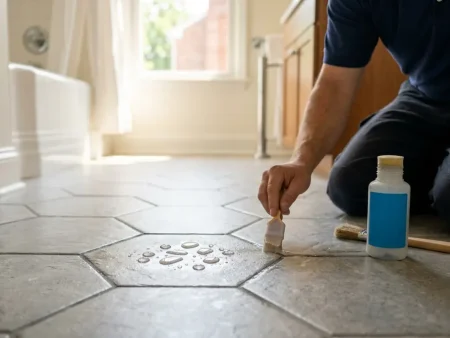
Get a glass of water. Not for you, for the floor. Pick a spot that looks worn, like in front of the kitchen sink or the path from the back door, and drip a few drops on it. Then wait. If the water beads up and sits there, you’ve still got finish on the wood. If it soaks in and the wood goes dark in a couple of minutes, the finish is gone in that spot. That one little test answers most of the hardwood floor recoat vs refinish question before anybody shows up with a sander.
Before you refinish hardwood floors or pay anybody for anything, do that first. I clean hardwood for a living, and carpet, and rugs, and pretty much any floor you can walk on. Which means I see a lot of floors that people think are ruined. Most aren’t. Some are. Here’s how I sort them.
Scratches only in the finish? Recoat.
Scratches, gray spots or stains down in the actual wood? Refinish.
That’s it. Everything below is just me explaining how to tell the difference and why the cheap option is sometimes the right one and sometimes a total waste of money.
This part trips people up, and it matters a lot. Pull a floor vent cover and look at the edge of the board where it’s cut. Solid wood looks the same all the way through, top to bottom. Engineered has a thin layer of real wood on top of plywood, and you can see the layers stacked like a sandwich.
Why care? Because a screen and recoat never touches the wood, so it’s safe on either kind. Sanding is different. On engineered with a thin wear layer, an aggressive sander can go right through the good stuff into plywood, and then you’re replacing the floor instead of fixing it. Not a fun phone call to get.
If you can’t find a vent, check the top of the basement stairs or a closet threshold. Or pull up a floor register in an upstairs bedroom. Somewhere there’s a cut edge. Houses from the 50s and 60s around the county are almost always solid oak. Newer builds, it’s a coin flip, and some builders used engineered upstairs and solid down.
Honestly, if you don’t know what you have, assume engineered until somebody proves otherwise. It’s the safer bet, and it pushes you toward the gentle option first, which is usually where you should start anyway.
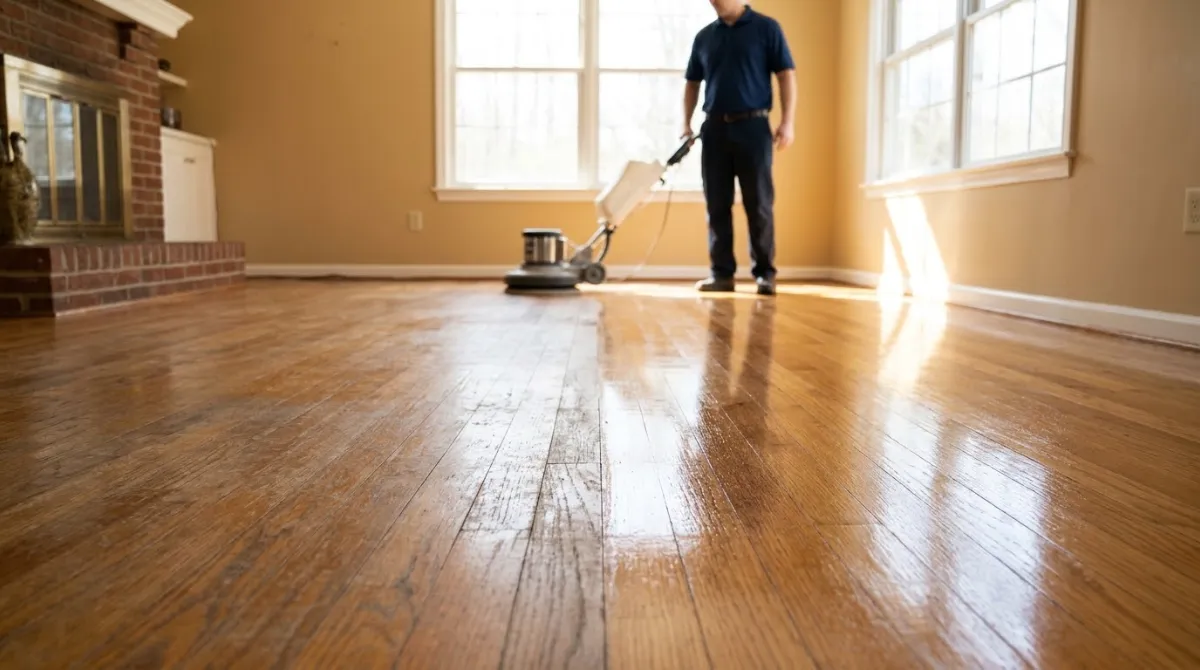
People call it a “screen and buff” or a screen and recoat. Same thing. The floor gets cleaned really well, then a buffer with a fine abrasive screen scuffs up the top layer of the old polyurethane. Not down to wood. Just enough so new finish has something to grab. Vacuum, tack, then one fresh coat of finish goes on.
Usually a day of work. You can walk on it in socks by that night or the next morning depending on the product. Furniture back in a few days. Not a ton of dust because nobody’s touching bare wood.
When you recoat hardwood floors at the right time, it’s great. Floors look new-ish, the light surface scratches basically disappear, and you’ve added years before you ever need to sand.
You can’t recoat hardwood floors that have been waxed or treated with one of those “restore your shine” polish products from the grocery store. New poly won’t stick to that junk. It peels. I’ve seen it peel in sheets, like a sunburn. If anybody in the last ten years used one of those products on your floor, mention it. Seriously. A good refinisher will test first, but tell them anyway.
Full sand. Down to bare wood, usually three passes with coarser to finer paper, edges done with a separate machine, then stain if you want it and two or three coats of finish.
It’s loud. It’s dusty, even with the newer dust-containment rigs. It takes most of a week once you count dry time, and with oil-based poly the smell hangs around a while (the EPA has plenty on indoor air and VOCs if you’re worried about the kids or a pet bird). But it’s the only real fix once wear has gone through the finish and into the wood.
Here’s something nobody tells you. Solid hardwood can only be sanded so many times. Every full refinish takes a little wood off the top. A standard 3/4″ solid oak floor can handle a bunch of them over its life. Engineered hardwood with a thin top layer? Maybe once. Maybe never. So when people refinish hardwood floors every few years just because they’re tired of the color, they’re kind of spending down the floor.
Okay. Back to your floor, and back to the hardwood floor recoat vs refinish call. Get down on your knees with a flashlight held low and flat across the boards. Raking light shows everything.
Fine white scratches that you can feel with a fingernail but that look white or cloudy? Those are in the finish. Recoat territory.
Dull traffic lanes where the shine’s gone but the wood color looks the same as the rest of the room? Usually recoat, as long as your water test beads up.
Gray or black areas, especially by doors and sinks? That’s water getting into bare wood. Refinish. Sometimes board replacement.
Deep dents and gouges from a dropped cast iron pan or a dog going nuts at the mail carrier. A recoat won’t hide those, and people who refinish hardwood floors to get rid of them are sometimes disappointed. Even a refinish might not fully, depending on depth.
Pet urine stains that went dark? Bad news, those are usually through the finish and into the grain. Sanding helps some. Sometimes the boards have to come out.
Mixed bag? That’s normal. A lot of floors I see in older Towson and Baltimore homes have a dining room that just needs a refresh and a kitchen doorway that’s flat-out gray. You can do different things in different rooms, though matching sheen can get tricky.
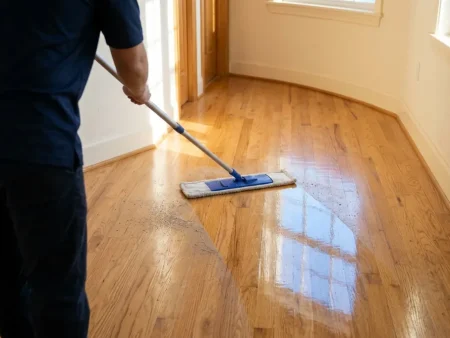
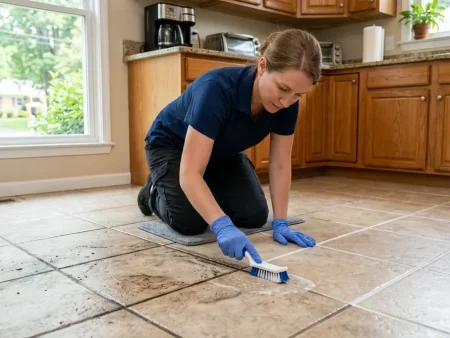
This is where I come in. Before anybody can recoat hardwood floors, the surface has to be truly clean. Not Swiffer clean. Grease from cooking, old cleaner residue, that cloudy film from years of the wrong spray mop solution. Any of that left behind and the new coat won’t bond right.
And honestly? Sometimes after a deep cleaning, people decide they don’t need either one. A lot of “dull” floors are just dirty floors. Years of residue from the wrong products builds up and kills the shine, and once it’s off, the finish underneath looks fine. I love those jobs. Customer thinks they’re spending real money on sanding and they don’t have to. Or they find out a simple screen and recoat is all that’s left to do.
We do a lot of hardwood floor cleaning Cockeysville MD homes need in the fall, right before the holidays, since that’s when everybody looks at their floor and goes “huh.” In the city, rowhome floors take a beating from grit tracked in off the sidewalk, and hardwood floor cleaning Baltimore folks book with us tends to be about that sandy, scratchy wear.
Road salt is murder on finish. It’s abrasive going in and it leaves a white haze when it dries. I wrote about road salt stains on carpet, and most of it applies to wood too. Big mats at the door. Shoes off. Wipe up the slush.
Depends on traffic, and on if you have a dog with long nails and opinions about the UPS truck. Busy family house, I’d say look at a screen and recoat every three to five years. Quiet house, longer. The trick is doing it BEFORE you wear through to bare wood. Once you’re down to wood in the traffic lanes, you can’t recoat hardwood floors anymore, so the cheap option’s off the table and you’re looking at a full sand.
People ask me if they should just refinish hardwood floors right away and “get it over with.” If the water still beads, I’d say no. Recoating is cheaper, faster, keeps more wood on the boards, and you’re not living out of the spare bedroom for five days.
Skip steam mops on wood. I know they’re popular. Heat plus moisture pushed into the seams is bad for finish and worse for the wood underneath. I see cupped boards and white cloudy finish from steam mops more than I’d like.
Don’t mop with vinegar every week either. Little bit of acid, over and over, dulls poly.
Felt pads on every chair leg, especially after you screen and recoat, since fresh finish is soft for a couple of weeks. Every one. Check them twice a year because they fall off and nobody notices till there’s a scratch.
And if you’re on the fence about hardwood floor recoat vs refinish, the drop test plus the flashlight trick will usually settle it. If it’s still not clear, get someone to look at it in person.
Sometimes people get to the end of this and decide the bedrooms should just be carpet. Softer, quieter, warmer in January. No shame in it. We do new carpet sales and carpet installation in Towson and across the county, and installs come with a lifetime warranty. Families up near the office parks off York Road call us for carpet installation Hunt Valley MD when the upstairs wood’s too far gone and the kids’ rooms need something softer anyway.
Extreme Carpet Cleaning LLC is family-owned, started by Shawn Mullikin back in 1998, still working out of the shop on Beaver Dam Road in Cockeysville. IICRC certified technicians. 150% money-back guarantee on our cleaning and repair work.
So that’s hardwood floor recoat vs refinish in plain words. Water beads, you probably recoat. Water soaks in, you’re sanding. Gray wood, gouges, old pet stains? Sanding, maybe new boards.
Want us to come look and give the floor a real cleaning first? Call (410) 666-6600 or request a free quote. Worst case, you find out the floor was just dirty. That’s a pretty good worst case.


Tell us a little about your project. We’ll come out, take a look, and send you a written quote within one business day.