
What Is IICRC Certification? A Carpet Cleaner Explains
October 26, 2026
☑️ 150% Money-Back Guarantee | Family Owned Since 1998
10815 Beaver Dam Rd Suite A, Cockeysville; MD 21030
☑️ Lifetime Warranty on Installations
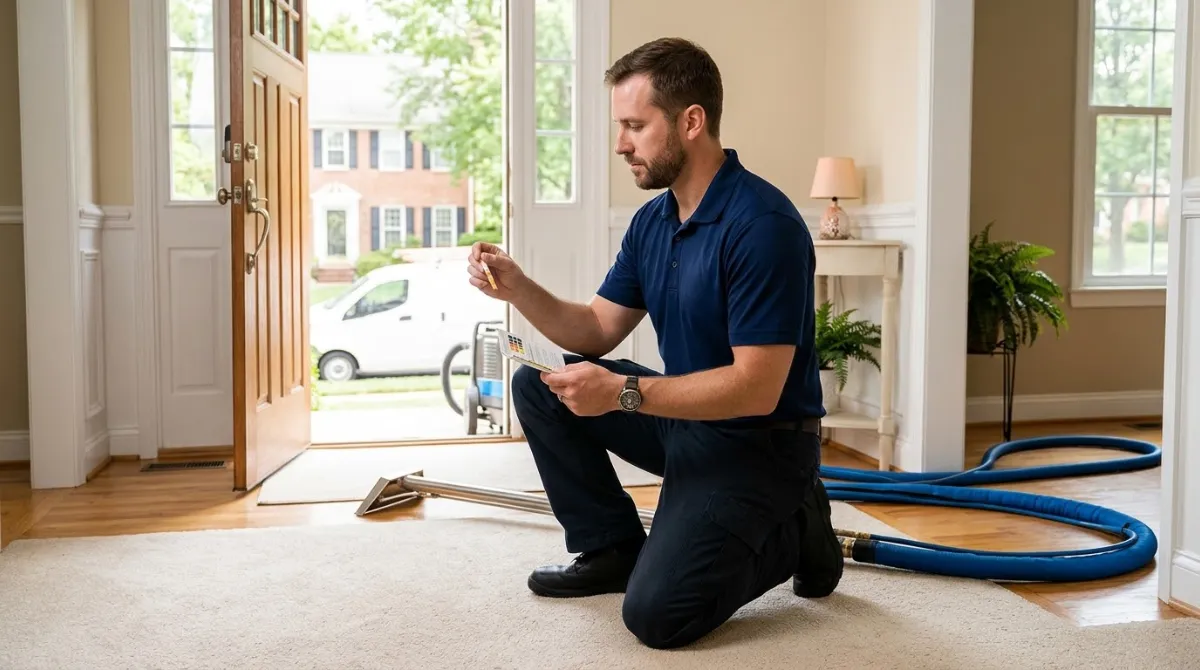
A customer asked me once, totally serious, if IICRC was a radio station. Fair question, honestly. It’s five letters on the side of a lot of vans and on a lot of websites, ours included, and almost nobody explains it. So when somebody types what is iicrc certification into their phone at 11 p.m. because the dog just threw up on the new rug, I’d like them to get a real answer instead of a sales pitch.
Here goes. I’ve been dragging hoses up Baltimore County stairways since flip phones, so I’ll keep the jargon down.
The Institute of Inspection, Cleaning and Restoration Certification. Try saying that to a customer at the front door at 8 a.m. with a coffee in your hand. Nobody does. We just say the letters, eye-eye-see-are-see, and move on.
It’s a nonprofit that writes cleaning and restoration standards and certifies the people who do the work. Not a company. Not a franchise. They don’t sell you anything or send crews out. Think of them more like the folks who write the rulebook and give the tests.
Their website is iicrc.org if you want to read the iicrc standards stuff yourself. Bring coffee. It reads like it was written by people who argue about drying charts for fun (they kind of are).
Short answer, somebody sat in a class for a few days, usually in a hotel conference room with bad cookies, and then passed a test on one kind of work. Carpet cleaning is one. Upholstery is another. Water damage, odor control, mold, stone and tile, rugs, there’s a bunch.
To stay IICRC certified, techs have to keep up continuing education and renew. So it’s not a one-and-done certificate somebody got in 1994 and framed in the bathroom.
Here’s the part people miss. The certification is for people, not for a company. A business can call itself a “certified firm” if it has certified techs on staff and meets some other requirements. But the thing you actually care about is the person standing in your living room holding the wand. Is that guy trained? That’s the question.
A piece of paper doesn’t make somebody good at their job. I’ve met certified guys I wouldn’t let near my mother’s sofa, and I’ve met old-timers who’d forgotten more than most courses teach. But on average? Training helps. A lot. Asking what is iicrc certification really comes down to asking if the tech knows why things work, not just which button to push.
Carpet class, roughly, from what my guys come back talking about:
That last one matters more than people think. Half of the bad cleaning I see isn’t from not trying hard enough. It’s from trying too hard with the wrong stuff.
The iicrc standards themselves are written documents, kind of like building code for cleaning. There’s one for carpet cleaning, one for water damage, one for mold, and so on. They spell out what proper procedure looks like. When there’s a dispute between a homeowner and a contractor, or with an insurance company after a flood, those documents are often what people point to.
Three reasons, and I’ll keep it short.
Your carpet warranty. A lot of carpet manufacturers want you to have it cleaned with hot water extraction, by a trained professional, every 12 to 18 months or so. If something goes wrong and you file a claim, they might ask for receipts. “My cousin rented a machine” isn’t going to cut it.
Wool and natural fibers. Wool is gorgeous. Wool also hates high pH and too much heat. A tech who knows the fiber is going to change chemistry and temperature. One who doesn’t might give you a shrunken, fuzzy, color-bled mess. We’re WoolSafe approved too, which is a separate thing from IICRC, and if you’ve got wool you might like my post on how to clean a wool rug.
Water damage. Different ballgame. Water from a clean supply line, dirty water from a backed-up drain, sewage, they’re all handled totally differently under the iicrc standards. Drying a basement wrong isn’t just ugly, it can become a mold problem in a couple of days. You want somebody trained for that one, no exceptions.
Being IICRC certified doesn’t mean a company has insurance (ask them), or fair prices, or shows up on time. It doesn’t mean every stain will come out, because some won’t, no matter who’s cleaning. Kool-Aid in wool from 2015? Rough.
And it doesn’t mean the guy who comes to your house is the one who’s certified. Ask! It’s totally fine to ask. “Is the tech coming out certified?” Any decent company will answer that without getting weird about it.
People assume one certificate covers everything. It doesn’t. Being trained on carpet doesn’t automatically make someone good on your sofa, and it definitely doesn’t make them a water damage pro.
Upholstery is its own animal. A rayon chair arm can go from cream to tea-stained in about ninety seconds if somebody guesses wrong. A trained tech flips the cushion, reads that little W or S code on the tag, wets a hidden corner under the skirt and waits. One who hasn’t might just hit it with the same wand he used on the hallway carpet. Bad idea.
Rugs too. A hand-knotted rug and a machine-made rug from a big box store look sort of similar from across the room. They’re cleaned very differently, and some of them go back to the plant instead of getting cleaned on your floor.
So when you ask if someone’s IICRC certified, the honest follow-up is “certified in what?” Not to be a pain. It’s just the right question. Flooded basement, you want the water guy. Rug with red dye that already bled into the fringe once? Different guy, or at least a different class. Most good companies have people trained across several of these, and they’ll send the right person.
A few things that make me wince when customers tell me about them later.
The “certified” sticker with no name attached. Any kid with a library printer could make that logo for a dime. So get a name. The iicrc standards aren’t a secret, and a legit outfit will happily talk about them.
The guy who says every stain will come out. Nope. Nobody honest says that. A real certified carpet cleaner tells you up front which spots are probably permanent.
The cleaner who soaks the carpet and leaves it sopping, then says “it’ll dry by tomorrow.” Sometimes it does. Sometimes it’s still damp three days later and the room smells like a gym bag.
Not to grill anybody. Just to see how they answer.
What method do you use? (Truck-mounted hot water extraction, portable, low-moisture, something else? There’s a whole post on truck-mounted carpet cleaning vs rental if you want my take.)
How long until it’s dry?
Do you move furniture?
What happens if I’m not happy?
Are your techs certified, and is it the same person who’ll be at my house?
If they hem and haw on the last one, that tells you something. If the price sounds way too low, like a “whole house for the cost of a pizza” coupon, ask what’s actually included. Spoiler, usually not much.
Real talk, from my side of it. Training changed how we work. Early on I thought hotter and stronger was always better. Nope. I’ve been called in after other outfits did exactly that to a wool runner, crunchy as a cornflake, and there’s only so much you can undo. A good certified carpet cleaner, the way I see it now, is mostly a guy who got burned once and learned to test a corner first.
It also changes how you talk to people. When somebody asks what is iicrc certification and why our guys bother, I’ll tell them it’s mostly about not guessing. You know why a stain reacts the way it does. You know when to stop.
That’s what we try to bring to every house. Around our shop, homeowners looking for an IICRC certified carpet cleaner Cockeysville can usually get us out the same week, since we’re right there off Beaver Dam Road. Regular carpet cleaning Cockeysville is a big part of what we do, start to finish, by the same trained crew.
Here’s where training really shows up. Older homes out in the western part of the county have some interesting floors. Wool wall-to-wall from decades ago, antique rugs, the occasional silk blend somebody brought back from a trip. Those are the jobs where knowing your fibers pays off. Folks call us for carpet cleaning Glyndon MD in some of those big old Victorian places, and a lot of the farmhouses up toward the Pennsylvania line book carpet cleaning Upperco once the fields dry out in spring and the mud season’s over.
And when a carpet’s just done, past saving, we’re not going to sell you a cleaning that won’t help. We’ll tell you. We also do new carpet sales and carpet installation in Hunt Valley and around the county, with a lifetime warranty on every install.
That’s what is iicrc certification in a nutshell. A real training and testing program, with written standards behind it, for the people who actually do the work. Not a guarantee of anything by itself. But a good sign, and a good starting question when you’re picking someone to come into your home.
Extreme Carpet Cleaning LLC has been family-owned since 1998, started by Shawn Mullikin. IICRC certified technicians. WoolSafe approved. The truck-mounted rig parked in your driveway. Plus a 150% money-back guarantee on cleaning and repair, which, honestly, I’d rather never have to pay out.
Want to ask us the five questions above? Go for it. Call (410) 666-6600 or request a free quote. We’ll answer every one, no hemming, no hawing. And no, we’re not a radio station.


Tell us a little about your project. We’ll come out, take a look, and send you a written quote within one business day.